
Ghost Production: Is It Legal? Copyright, NDAs, and Ownership
The Direct Answer
Yes — ghost production is entirely legal. It is a standard commercial arrangement in which a producer creates music and transfers full copyright ownership to a buyer. This is no different legally from a ghostwriter writing a book for a celebrity author, or a session musician recording for an artist's album. The buyer owns the work, the creator is compensated, and the arrangement is private by mutual agreement.
The Legal Mechanism: Copyright Transfer
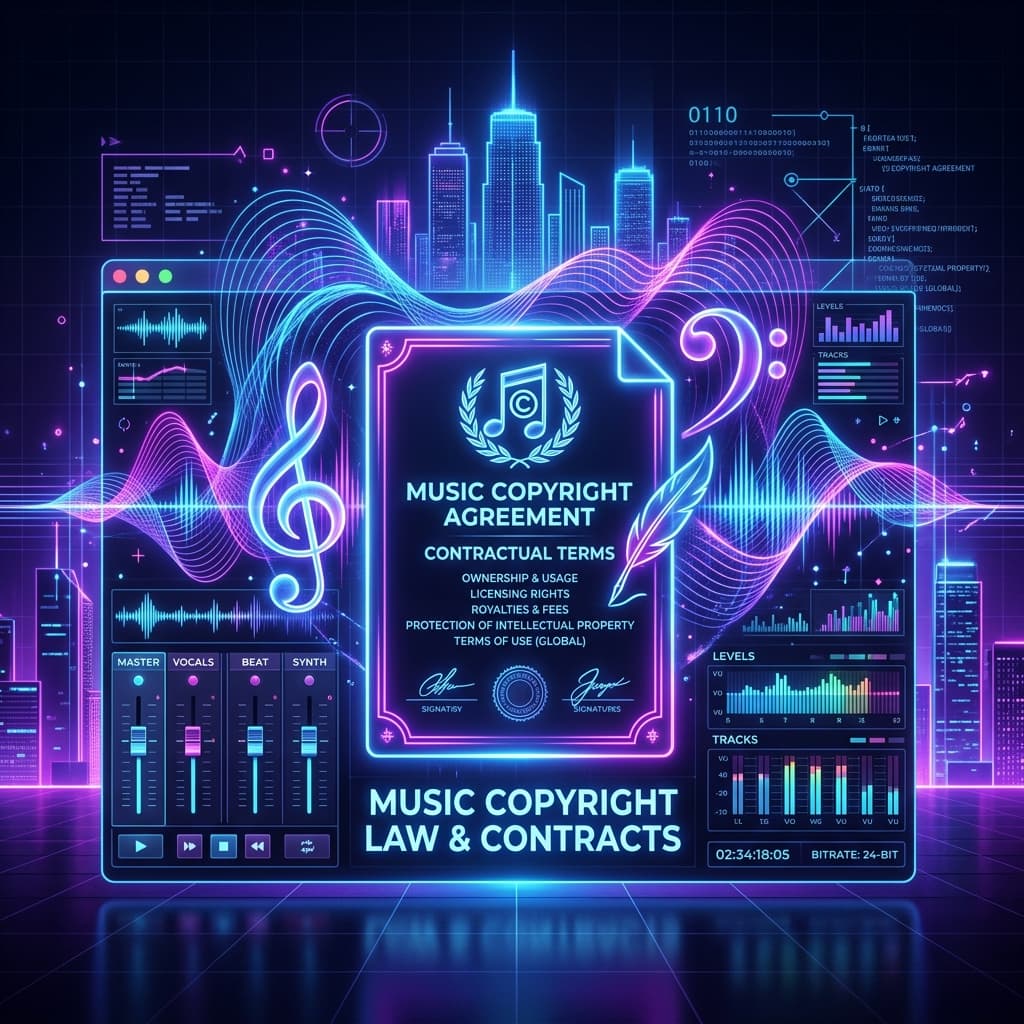
Copyright in a music track normally belongs to the person who created it. In a ghost production transaction, that right is transferred by contract. The producer signs a copyright assignment agreement that moves all rights — master recording, composition, and publishing — to the buyer.
Once signed, the buyer holds 100% of the copyright. They can release the track under any artist name, on any platform, collect 100% of the royalties, and prevent any other party from using the music. The producer retains nothing.
What an NDA Does and Why You Need One
A Non-Disclosure Agreement (NDA) is the second critical document in any ghost production purchase. While the copyright transfer handles ownership, the NDA handles confidentiality. It prevents the producer from publicly disclosing that they created the track.
An NDA is legally enforceable. If a producer violates it — by posting the track on social media, crediting themselves publicly, or disclosing the arrangement to third parties — they are in breach of contract and exposed to legal liability. All tracks sold on SoundHaus include a fully executed NDA as part of the purchase documentation.
Moral Rights: The European Consideration
In some European jurisdictions, creators hold 'moral rights' in their work — including the right of attribution (to be credited as the author) and the right of integrity (to object to modifications). These rights exist separately from copyright and, in some countries, cannot be fully waived.
In practice, this rarely causes problems in the ghost production industry. Most ghost production transactions take place between parties in jurisdictions where moral rights are either not enforceable (such as the United States), or where producers explicitly waive their moral rights as part of the contract. Reputable platforms — including SoundHaus — structure their agreements to address this.
Are Streaming Platforms Aware of Ghost Production?
Yes. Spotify, Apple Music, Beatport, and all major distribution platforms are aware that ghost production is common practice. They do not prohibit it. When you upload a track to a distributor, you are confirming that you hold the rights to release it — and with a legitimate ghost production purchase, you do.
The distributor does not require proof of who produced the track. They require proof that you hold the rights. Your copyright transfer agreement is that proof.
Common Misconceptions
Is ghost production the same as plagiarism?
No. Plagiarism is using someone else's work without permission. Ghost production is a contracted arrangement where the creator explicitly gives permission and is compensated for it. There is no deception of a third party — the ownership transfer is legally documented.
Is it fraud to release a ghost-produced track as your own?
No. You legally own the track. You are not misrepresenting ownership — you hold the copyright. The only party who could potentially raise an objection is the producer, and they have contractually agreed to anonymity.
Can a platform revoke your rights after purchase?
A reputable platform cannot. A copyright transfer is a legal transaction — once completed, the rights belong to you. This is different from a licence, which can sometimes be revoked. Always confirm that your purchase includes a full copyright transfer, not just a licence. SoundHaus provides full copyright transfer on every sale.
The Bottom Line
Ghost production is legal, contractually sound, and widely used across the music industry. The key requirements for a legally clean transaction are: a properly executed copyright transfer agreement, an NDA, and a platform that provides true exclusivity. SoundHaus satisfies all three on every purchase.